

Types of Coveralls
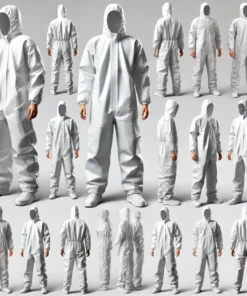
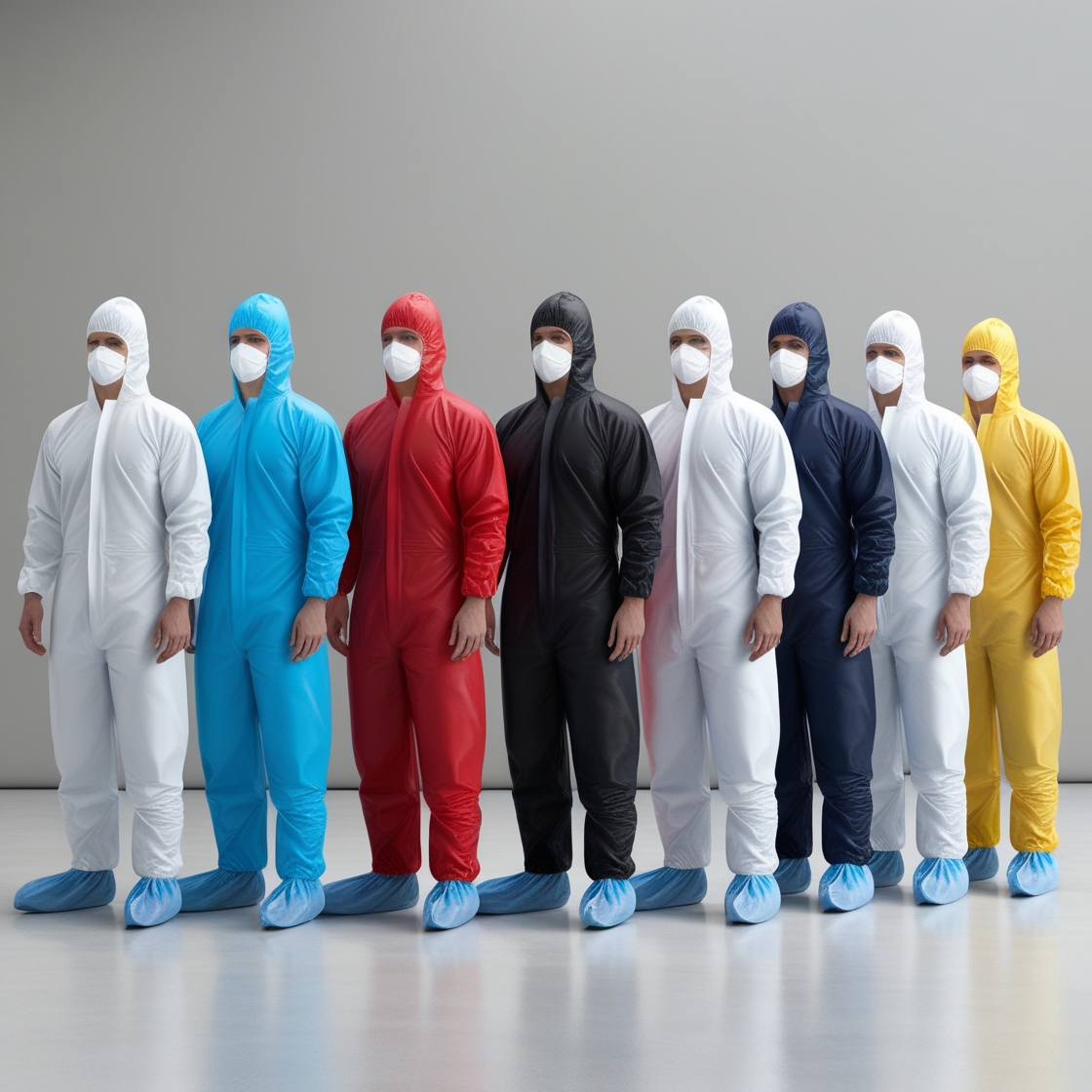
- Disposable Coveralls
- Material: Made of lightweight, non-woven materials like polypropylene.
- Features: Single-use, lightweight, breathable.
- Uses:
- Protection from dust, dirt, or light chemical splashes.
- Used in industries such as healthcare, pharmaceuticals, and painting.
- Flame-Resistant (FR) Coveralls
- Material: Treated cotton or synthetic fabrics like Nomex or Kevlar.
- Features: Resistant to fire, self-extinguishing, durable.
- Uses:
- Protecting workers in oil and gas, welding, and firefighting industries.
- Ideal for environments with flammable materials or high heat.
- Chemical-Resistant Coveralls
- Material: PVC, rubber, or polyethylene-coated fabric.
- Features: Resistant to chemicals, waterproof.
- Uses:
- Protecting from chemical spills, toxic substances, and corrosive liquids.
- Commonly used in laboratories, chemical manufacturing, and cleaning industries.
- High-Visibility (Hi-Vis) Coveralls
- Material: Bright-colored fabric with reflective strips.
- Features: Visibility in low-light or high-traffic environments.
- Uses:
- Road construction, mining, and outdoor utility work.
- Ensures safety by making workers more visible.
- Insulated Coveralls
- Material: Thick fabric with thermal insulation.
- Features: Protects against cold, wind, and snow.
- Uses:
- For workers in cold storage, outdoor construction, and winter industries.
- Keeps body warm in extreme weather conditions.
- Anti-Static Coveralls
- Material: Conductive fibers woven into the fabric.
- Features: Prevents static build-up, flame retardant.
- Uses:
- Electronics manufacturing, aerospace, and explosive environments.
- Reduces the risk of static discharge causing explosions.
- Arc-Flash Coveralls
- Material: High-performance, arc-rated fabric.
- Features: Provides protection against electric arcs and heat.
- Uses:
- Electricians, powerline workers, and utility industries.
- Reduces burn injuries from arc flashes.
- Waterproof Coveralls
- Material: PVC or coated synthetic materials.
- Features: Fully waterproof, sometimes with heat-sealed seams.
- Uses:
- Protecting workers in wet environments, such as fishing, marine work, and water utility services.
- Cleanroom Coveralls
- Material: Non-shedding, lint-free fabric.
- Features: Designed for sterile environments.
- Uses:
- Used in electronics, biotechnology, and pharmaceutical cleanrooms.
- Prevents contamination in sensitive environments.
- Standard Industrial Coveralls
- Material: Durable cotton, polyester, or blended fabrics.
- Features: Basic protection against dirt and grime.
- Uses:
- General industrial work, automotive repair, and construction.
- Keeps clothes clean and provides minor physical protection.
Key Features to Consider
- Durability: Needed for industries requiring regular use.
- Breathability: Important for hot environments to ensure comfort.
- Resistance: Tailored to specific hazards like fire, chemicals, or moisture.
- Fit and Design: Options for hoods, elastic cuffs, and zipper closures.
Coveralls ensure safety, improve hygiene, and protect wearers across various industrial and environmental settings.